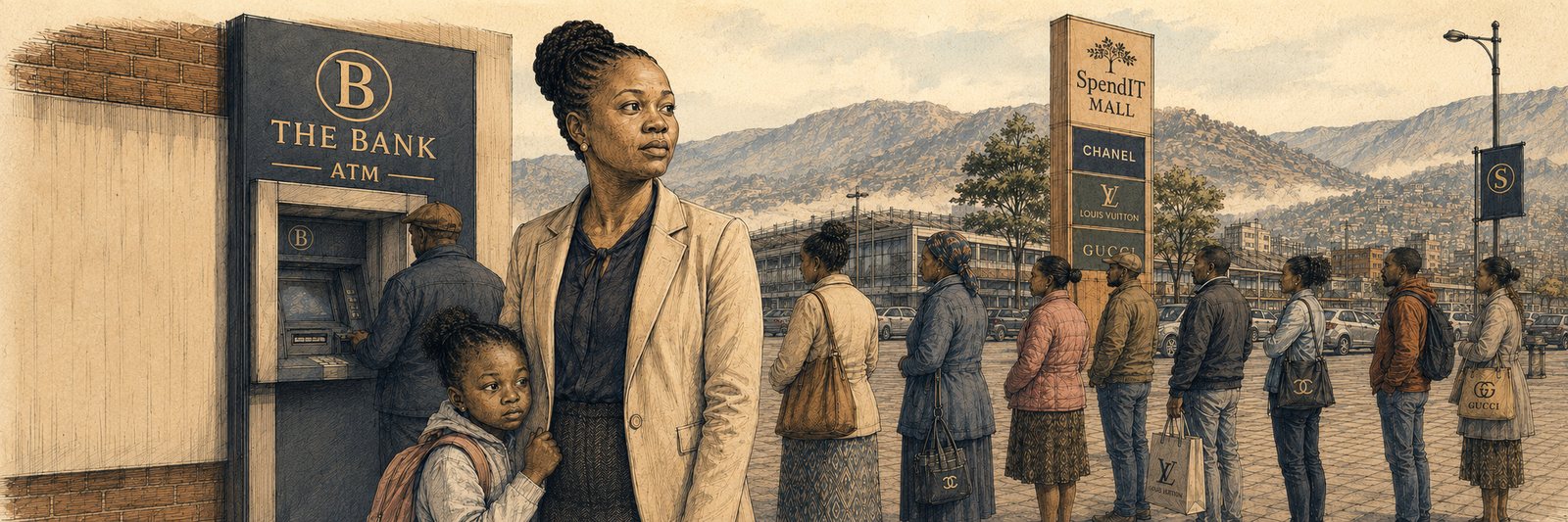

Nobody wakes up in the morning and decides to destroy their financial future, yet people do it every day. Not always dramatically and not even necessarily through recklessness.
It often happens through habits so normalised inside families, communities and social circles that they stop looking like financial decisions at all. That is one of the most difficult things about money.
Many of the financial behaviours shaping our adult lives were learned long before we earned our first salary. It is likely that nobody ever sat us down and formally taught us about money. Most of us learned it the same way we learned language: by being there.
We watched how money moved through the household. What got paid first. What had to wait. Which expenses caused anxiety and which ones did not. We listened to how money was spoken about, or in some households, not spoken about at all. Over time, those lessons stopped feeling like lessons. They simply felt like reality.
That is precisely why inherited money habits can be so dangerous. The things we know we do not know can usually be learned. The greater danger often lies in the things we are completely certain about, but have never stopped to question.
Some of us grew up in households where money disappeared as quickly as it arrived because there was never enough of it to plan around. Some learned that debt was survival. Others learned that appearing financially stable mattered more than actually becoming financially stable. Some inherited fear around banks, investments and credit. Others inherited silence.
Silence is expensive. If nobody teaches you how money works, life eventually teaches you through penalties, debt, pressure and costly mistakes.
Every week, banks repossess somebody’s vehicle or home. Every day, somewhere in the country, a family dispute, a divorce, a business disagreement or an inheritance battle has money sitting quietly at its centre.
Last week’s edition of Plain Money focused on inflation, interest rates and the growing financial pressure quietly building across households and businesses. Beneath all those economic forces, however, sits another issue that receives far less attention: How much of our financial behaviour is genuinely ours, and how much of it was inherited without us ever questioning it?
That question matters particularly now. The economy is becoming more expensive to survive inside. Fuel prices remain elevated. Food costs continue creeping upwards. Borrowing remains costly. Households are under pressure. Difficult economic periods also have a way of exposing financial habits that once felt harmless during easier times.
One of the clearest examples is the habit of rewarding ourselves immediately whenever money arrives. For many people, payday does not begin with planning. It begins with release.
After surviving a difficult month, spending becomes emotional relief rather than financial decision-making. Money enters the account and immediately exits again through clothes, lifestyle spending, alcohol, unnecessary upgrades or obligations designed more around social appearance than long-term stability.
That behaviour is understandable as it is questionable. Understandable and sustainable, however, are not always the same thing. Over time, repeated financial decisions become financial identity. Identity is difficult to interrupt.
That is why two people earning exactly the same salary can arrive at completely different places financially after ten years. One slowly builds stability. The other remains trapped in permanent recovery mode, constantly surviving one emergency at a time.
The difference is often not intelligence. It is behaviour repeated consistently over time.
That is where this conversation becomes uncomfortable. Many of the money habits damaging people financially are socially rewarded in the short term. We celebrate visible consumption far more than quiet discipline.
Nobody compliments the person who stayed home to avoid unnecessary spending. Nobody applauds the worker who quietly redirected money into savings instead of upgrading a vehicle. Nobody sees the dignity in declining debt before it becomes dangerous.
The economy, however, eventually sees it. The monthly budget eventually sees it too.
That is partly why financial pressure feels so relentless for many households. The modern economy already demands more from people financially than previous generations had to carry: rent, transport, school fees, electricity, insurance, groceries, family obligations, debt repayments and internet costs.
Now add lifestyle pressure on top of that: the pressure to look successful, appear financially comfortable and constantly demonstrate progress publicly even when privately struggling underneath it.
That combination becomes dangerous, especially during uncertain economic periods.
When economies tighten, financial flexibility becomes more valuable than appearances. This is where many households quietly trap themselves.
A financed car that looked manageable during stable periods becomes stressful once fuel rises sharply. A furniture account that once felt small becomes heavier once school costs increase. Multiple short-term debts that once seemed harmless separately begin colliding inside the same monthly budget. Suddenly, survival itself becomes expensive.
Which is why unlearning bad money habits matters. Not because discipline magically creates wealth overnight, but because poor financial habits become more destructive in fragile economies.
Coming out of financial distress is often far more costly than staying out of it in the first place. One of the hardest financial truths to accept is that income alone rarely fixes undisciplined money behaviour. People often believe: “If I earned more money, I would finally become financially stable.”
More often, it is only partly true. The deeper truth is that without behavioural change, higher income can simply produce more expensive instability.
Lifestyle inflation quietly replaces financial progress. Expenses rise with income. Appearances improve, yet the pressure remains.
That is why financial awareness matters far beyond budgeting spreadsheets and motivational slogans. The more financially aware we become, the more intentional their decisions start becoming. We begin distinguishing between survival spending, emotional spending, social spending and productive spending.
That distinction changes everything because money used productively creates future breathing room while money used emotionally often creates future pressure.
One of the most important financial shifts people can make during uncertain times is learning to separate temporary emotional satisfaction from long-term financial stability.
The same principle applies to SMEs. Many businesses inherit unhealthy financial cultures too. Some owners confuse revenue with profit. Others expand emotionally during good months without preparing for weaker ones. Some operate entirely through instinct without proper records, cash flow planning or financial discipline.
That may survive during strong economic periods, but fragile economies expose it quickly. The businesses most likely to survive uncertain periods are not always the flashiest or fastest-growing. Often they are the most disciplined. They understand cash flow. They reduce unnecessary expenditure early. They separate business money from personal ego. They resist expansion that depends on perfect future conditions to survive.
None of this means people should live joyless lives built entirely around fear and restriction. Money is not only mathematics. It is emotional, cultural, psychological and social.
People spend money to celebrate, to belong, to cope, to recover, to reward themselves and sometimes simply to feel temporarily in control inside difficult lives. That reality should not be dismissed lightly. Neither should the long-term consequences of unmanaged financial behaviour.
Eventually, money compounds in one of two directions: towards stability or towards pressure. Small financial habits repeated consistently over years usually decide which direction wins.
That is the deeper challenge facing many households now. It is not simply surviving inflation or interest rates, but learning how to build healthier financial instincts inside an economy becoming less forgiving.
The real lesson in all this is that many financial problems do not begin with income alone. They begin with habits, impulses and behaviours repeated so often that they eventually start feeling normal. Difficult economic periods often expose people financially long before they strengthen them.
The challenge, therefore, is not only earning more money, but becoming more deliberate with the money already passing through our hands.
It is thinking more carefully before spending. It is becoming more honest about the difference between emotional spending and productive spending. It is learning to distinguish between financial appearance and actual financial stability.
In such uncertain economies, discipline becomes the ultimate protection.